
Exploring Types of Air Conditioners: Perfect Fit for You
Published On: Mon Apr 07 2025
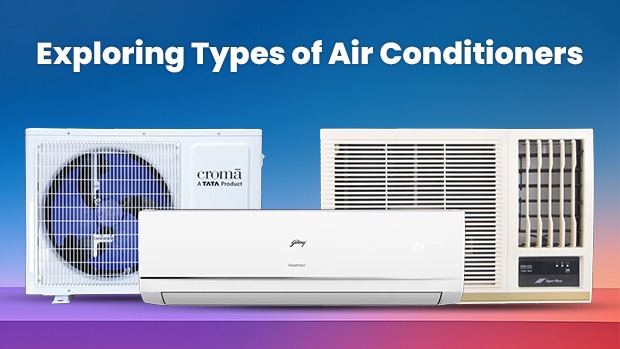
1. Window Air Conditioners
A window air conditioner is a single-unit cooling system designed to fit into a window or a wall opening. It's an ideal choice for cooling small to medium-sized rooms efficiently. These ACs are compact, easy to install and relatively affordable compared to split systems. They offer quick cooling and often come with features like remote control, adjustable fan speeds and energy-saving modes. Window ACs are perfect for homes, hostels and small offices where space and budget are limited.
Features
• Cooling capacity ranges from 5,000 to 25,000 BTUs, effectively cooling rooms up to 1,200 square feet depending on model and insulation quality.
• Includes adjustable thermostats, multiple fan speeds and sometimes remote controls for convenient operation from across the room.
• Features reusable, washable air filters that trap dust and allergens, improving air quality with minimal maintenance effort.
• Some models offer energy-saving modes and programmable timers to reduce power usage during off-peak hours.
• Many models come with dehumidification functions, helping remove excess moisture from the air to enhance comfort in humid climates.
• Compact design saves floor space and often fits in standard-size window frames without the need for structural modifications.
• Offers quick installation with mounting kits included and some models also support Wi-Fi or smart assistant compatibility for voice control.
Advantages
• Ideal for renters or temporary setups.
• Efficient for single-room cooling.
• Portable enough to relocate.
Best For: Small spaces, budget buyers or temporary needs, though they may block views.
2. Portable Air Conditioners
Portable air conditioners are floor-standing units with a vent hose that expels hot air through a window, making them perfect for rooms where traditional window ACs can't be used. They’re easy to move, quick to set up and ideal for flexible cooling in small to medium-sized spaces.
Features
• Cooling capacity spans 8,000 to 14,000 BTUs, suitable for rooms up to 500 square feet, depending on ceiling height and sunlight exposure.
• Equipped with built-in dehumidifiers and multi-speed fans, providing additional air circulation and moisture control in humid conditions.
• Features caster wheels and side handles for easy movement between rooms, plus a window kit for quick setup.
• Many units include digital displays, remote controls and sleep modes for quiet, energy-efficient operation overnight.
Advantages
• No permanent installation needed.
• Works in homes with non-standard windows.
• Some offer heating too.
Best For: Renters or small spaces needing flexible cooling.
3. Split Air Conditioners
Split air conditioners consist of an indoor unit and a separate outdoor compressor, offering a sleek and quiet cooling solution for homes and offices. They’re ideal for permanent installations where aesthetics, performance and low noise matter.
Features
• Cooling capacity ranges from 9,000 to 36,000+ BTUs, adaptable for small rooms or larger spaces with multi-split configurations available.
• Includes inverter technology in premium models, adjusting compressor speed to maintain temperature, saving energy and reducing wear.
• Features quiet operation with noise levels as low as 19 decibels indoors, plus air purifiers for cleaner breathing air.
• Comes with smart controls like Wi-Fi connectivity, remote operation and programmable schedules for customized cooling.
Advantages
• Silent and efficient.
• Sleek design fits modern homes.
• Energy-saving options.
Best For: Homeowners or offices needing quiet, reliable cooling.
4. Central Air Conditioning
Central air conditioning systems cool entire homes or buildings through a network of ducts, all managed by a single thermostat. They provide consistent, whole-building comfort and are often integrated into existing HVAC systems.
Features
• Cooling capacity measured in tons (1 ton = 12,000 BTUs), with systems from 1.5 to 5 tons cooling 1,000+ square feet effectively.
• Integrates with HVAC systems, offering cooling and heating through the same ductwork, often with advanced air filtration included.
• Features zoning capabilities with dampers, allowing different temperatures in separate areas for personalized comfort control.
• Includes high-efficiency SEER ratings (up to 20+), smart thermostats and variable-speed blowers for optimal energy use.
Advantages
• Uniform cooling throughout.
• Hidden components.
• Boosts property value.
Best For: Large homes or commercial spaces.
5. Ductless Mini-Split Systems
Ductless mini-split systems offer the efficiency of split ACs without the need for ductwork, making them ideal for older homes, room additions, or spaces lacking central HVAC systems. They provide flexible, energy-efficient cooling and heating with independent zone control.
Features
• Cooling capacity from 6,000 to 60,000 BTUs, scalable with multiple indoor units for multi-room cooling or heating needs.
• Features independent zone control, letting each indoor unit adjust temperature separately via individual remotes or smart apps.
• Includes heat pump options for year-round use, reversing refrigerant flow to provide efficient heating in colder months.
• Offers versatile mounting—wall, ceiling or floor units—with washable filters and quiet operation below 25 decibels.
Advantages
• Energy-efficient without ducts.
• Flexible installation.
• Great for retrofits.
Best For: Ductless homes or multi-zone needs.
6. Evaporative Coolers
Evaporative coolers, also known as swamp coolers, use the natural process of water evaporation to cool the air, making them especially effective in hot, dry climates. They offer a sustainable and cost-efficient alternative to traditional air conditioning.
Features
• Cooling reduces air temperature by 15-40°F, depending on humidity levels, using a fan and water-soaked pads for natural cooling.
• Features low power consumption (often under 500 watts), with simple designs requiring minimal electricity compared to refrigerant-based ACs.
• Includes adjustable louvers and fan speeds, plus a water reservoir or hookup for continuous operation without frequent refills.
• Offers built-in air humidification, adding moisture to dry environments, with some models featuring dust filters for cleaner air.
Advantages
• Eco-friendly and cheap to run.
• Moisturizes dry air.
• Simple maintenance.
Best For: Dry, hot regions seeking sustainable cooling.
7. Packaged Terminal Air Conditioners (PTACs)
PTAC units are self-contained, wall-mounted air conditioners commonly found in hotels and commercial buildings. Known for their durability and room-specific control, they provide both cooling and heating in a compact form.
Features
• Cooling capacity ranges from 7,000 to 15,000 BTUs, sufficient for small rooms up to 400 square feet with consistent performance.
• Features electric or hydronic heating options, providing year-round climate control in a single, compact unit for guest comfort.
• Includes corrosion-resistant coatings and sturdy construction, built to withstand heavy use in commercial settings over years.
• Offers simple controls like wall thermostats or onboard panels, with some models featuring energy-saving modes for efficiency.
Advantages
• Room-specific control.
• Easy to replace.
• Reliable for small spaces.
Best For: Hotels, dorms or small commercial setups.
Choosing the Right Type of Air Conditioner for You
It all boils down to a few key factors that help you find the perfect fit for your space, budget and lifestyle
• Space: Start by measuring your room or home in square feet. This helps determine the right BTU (British Thermal Unit) rating for your AC. A general rule of thumb is 20 BTUs per square foot. For instance, a 150 sq. ft. room would need a unit with around 3,000 BTUs, while larger rooms require higher ratings for efficient cooling.
• Budget: Your budget plays a big role. Window and portable AC units are typically more affordable and easy to maintain.
On the other hand, central and ductless split systems involve a higher upfront cost but offer long-term energy savings and better performance for larger areas.
• Installation: If you're renting, portable or window ACs are usually the best bet since they're easier to install and remove. However, homeowners can consider more permanent solutions like split or central systems that require professional installation but offer better aesthetics and performance.
• Climate: Your local weather matters too. Evaporative (swamp) coolers work best in hot, dry climates as they add moisture to the air.
Traditional refrigerant-based ACs are better suited for humid areas, as they cool and dehumidify the air simultaneously.
• Aesthetics and Noise: If you're sensitive to noise or prefer a sleek, modern look, split or ductless systems are excellent choices.
They operate quietly and blend well with interior decor, unlike window units that can be bulky and noisier.
Electronics
Inverter and Non-Inverter AC: Which One Should You Choose?
Electronics
Best Semi-Automatic Washing Machines for Efficient & Budget-Friendly Laundry for 2025
Electronics
Best Top Load Washing Machines for Effortless Laundry in 2025
Electronics
Best Front Load Washing Machines of 2025: The Ultimate Guide to Efficiency, Features & Performance

Beauty & Grooming
10 Best Hair Oil in India for Strong and Healthy Hair in 2025
Electronics
Best Smartwatches Under 5000 in 2025

Electronics
Best Laptops under 70000 in India in 2025

Electronics
The Ultimate Guide to the best Air Conditioners in India (2025)

Beauty & Grooming
Best Face-Wash for Men updated for 2025

Fashion & Lifestyle
Bella Vita Perfumes: A Scent for Every Occasion

General
10 Best Telegram Loot Deal Channels for Exclusive Deals and Discounts in 2025

Beauty & Grooming
Best Sunscreens in India for Ultimate Sun Protection
Electronics
Beating the Heat with Top 10 Air Conditioner Brands in India
Electronics
Best Earbuds Under 3000: Top Budget Picks for Music, Calls & Gaming (Updated for 2025)
Electronics
Best Washing Machine in India with Features & Prices (Updated for 2025)
Electronics
Best Refrigerators in India: Top Picks for Every Home in 2025

Mobile
Best Mobile Brands in India: Top Choices Revealed for 2025

Electronics
Best Gaming Laptop Computer: Top Picks for 2025

Health & Supplements
Best Weight Gain Protein Supplements: The Ultimate Guide to Bulking Up Safely in 2025

Beauty & Grooming
Latest Mehndi Designs in 2025

General
Holi Celebration Ideas

General
The Ultimate Guide to Influencer Marketing

General
10 Best Coupon Apps: Unlock Incredible Savings in India
Electronics
Best Laptops under 50000

Mobile
Top 10 Best Phones Under 20000 for 2025

Health & Supplements
Top Vitamin Supplements for Men

Fashion & Lifestyle
Top 10 Best Indian Apparel Brands You Must Try

Beauty & Grooming
Grooming Tips for Men: Elevate Your Style Game

Subscription
Top 10 Cashback Apps in India to maximize your savings in 2025

Travel & Accessories
Essentials things for Every trip and Packing list

Fashion & Lifestyle
Types of Jeans for Men: Find Your Perfect Fit

Watches
Types of Watches : Timepieces for Every Style

Beauty & Grooming
Best Face Creams for all Skin Types: Find the Perfect One for You

Footwear
Best Sneaker Brands in India

Fashion & Lifestyle